
Introduction
The way brands connect with their audiences has changed significantly in recent years. Traditional advertisements are no longer the only way to reach customers. Today, people often trust recommendations from their favourite content creators, social media personalities, and influencers.
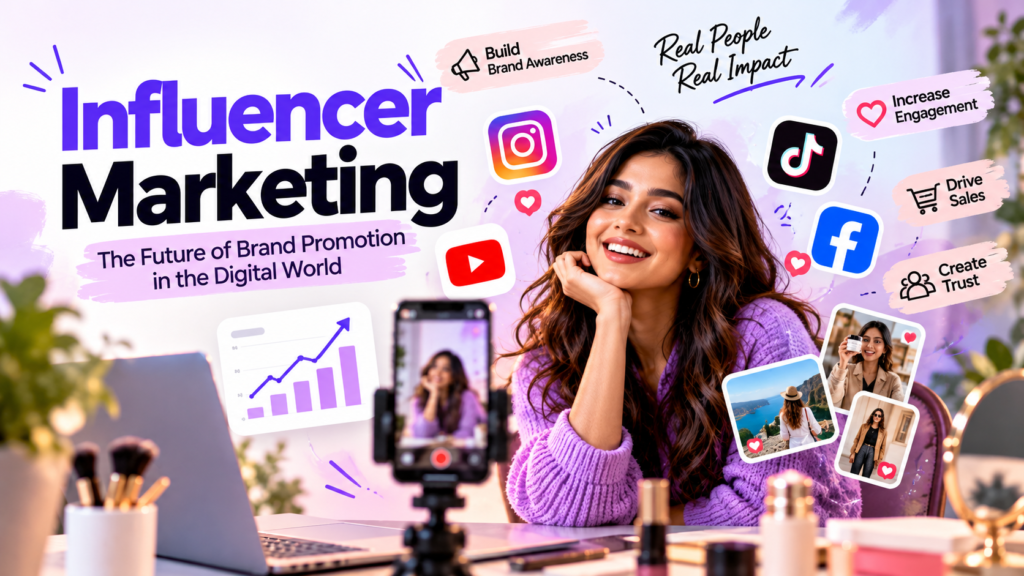
This is where influencer marketing comes in. It helps brands connect with their target audience through creators who have built trust and credibility on social media platforms such as Instagram, YouTube, and Facebook.
From fashion and beauty to technology, food, and lifestyle, influencer marketing has become an important part of modern digital marketing. Whether you are a small business or an established company, working with the right influencers can help you increase brand awareness, build trust, and reach potential customers.
What Is Influencer Marketing?
Influencer marketing is a digital marketing strategy in which brands collaborate with social media influencers or content creators to promote their products, services, or campaigns.
Instead of communicating directly with customers through traditional advertisements, brands use creators to present their offerings in a relatable and engaging way.
For example, a skincare brand might collaborate with a beauty influencer to demonstrate how its products work. Similarly, a technology company might partner with a tech creator to review a new smartphone.
The goal is not just to promote a product but also to create awareness, encourage engagement, and influence purchasing decisions.
Why Is Influencer Marketing Important?
Influencer marketing has become popular because people value authentic recommendations and relatable content. Here are some reasons why businesses are investing in it.
1. Builds Brand Trust
Influencers develop relationships with their followers through regular content and interaction. When they genuinely recommend a product, their audience may be more willing to consider the brand.
2. Reaches the Right Audience
Different influencers attract different audiences. A fitness creator may reach health-conscious people, while a fashion influencer may connect with people interested in clothing and styling.
Choosing the right creator helps brands reach people who are more likely to be interested in their products.
3. Increases Brand Awareness
Influencers introduce brands to audiences that may not have discovered them otherwise. Sponsored posts, product reviews, videos, and reels can help businesses improve their visibility.
4. Creates Engaging Content
Influencers understand the type of content their followers enjoy. They can present products through tutorials, storytelling, unboxing videos, challenges, and everyday experiences.
This makes promotional content more interesting and relatable.
5. Supports Business Growth
A well-planned influencer campaign can generate website traffic, product enquiries, sales, and customer engagement. However, results depend on factors such as audience relevance, content quality, campaign objectives, and product suitability.
Types of Influencers in Influencer Marketing
Not every influencer has millions of followers. Brands can work with creators of different sizes depending on their goals and budgets.
Nano Influencers
Nano influencers generally have around 1,000–10,000 followers. They often focus on specific communities and can offer brands a more personal connection with their audiences.
Micro Influencers
Micro influencers generally have around 10,000–100,000 followers. They are often useful for niche marketing, community engagement, and targeted campaigns.
Macro Influencers
Macro influencers generally have around 100,000–1 million followers. They can help brands reach larger audiences and increase visibility.
Mega Influencers and Celebrities
These creators typically have more than one million followers. They can provide significant reach and visibility, although collaborations may require larger budgets.
Follower ranges are commonly used guidelines, not universal definitions. The best influencer is not always the one with the highest follower count. Audience quality, engagement, relevance, and authenticity matter too.
Popular Types of Influencer Marketing Campaigns
Brands can collaborate with influencers in several ways depending on their marketing objectives.
1. Sponsored Posts: Creators publish paid content featuring a brand or product.
2. Product Reviews: Influencers share their experience or opinion about a product, helping audiences understand its features and potential benefits.
3. Unboxing Videos: Creators open and showcase products, highlighting packaging, design, and first impressions.
4. Instagram Reels and YouTube Shorts: Short-form videos help brands communicate messages through entertaining, educational, or creative content.
5. Affiliate Marketing: Influencers share trackable links or discount codes and earn a commission on qualifying sales.
6. Brand Ambassador Programs: Brands build long-term relationships with creators who regularly represent their products and values.
7. User-Generated Content (UGC): Creators produce content that brands may use on their own social media accounts, websites, or advertising campaigns, subject to agreed usage rights.
How to Build a Successful Influencer Marketing Campaign
An effective campaign requires more than simply selecting an influencer and asking them to promote a product.
Step 1: Define Your Goals
Decide what you want to achieve. Your goal could be increasing brand awareness, generating sales, launching a new product, improving engagement, or collecting user-generated content.
Step 2: Understand Your Target Audience
Identify your ideal customers, including their interests, age group, location, preferences, and online behaviour. This helps you choose creators whose audiences match your business.
Step 3: Find the Right Influencers
Evaluate creators based on their content quality, audience demographics, engagement, credibility, niche, and previous collaborations. Do not rely only on follower counts.
Step 4: Plan Your Budget
Set a realistic campaign budget that accounts for creator fees, content production, product samples, advertising rights, and other campaign expenses.
Step 5: Create a Clear Brief
Explain the campaign objective, key messages, deliverables, timeline, payment terms, disclosure requirements, and content usage rights. Give creators enough creative freedom to communicate naturally with their audiences.
Step 6: Track Campaign Performance
Monitor relevant metrics such as reach, impressions, engagement rate, link clicks, conversions, cost per acquisition, and return on investment.
Use these insights to understand what worked and improve future campaigns.
Common Influencer Marketing Mistakes to Avoid
Even a promising campaign can underperform if important details are overlooked.
- Choosing influencers only by follower count: A large audience does not automatically guarantee relevant engagement or sales.
- Ignoring audience authenticity: Review suspicious engagement patterns and whether the creator’s audience matches your target market.
- Over-controlling content: Excessive restrictions can make promotional content feel unnatural.
- Failing to set clear expectations: Always agree on deliverables, deadlines, payment, and content rights in advance.
- Ignoring performance metrics: Measure results against your campaign goals instead of judging success only by likes and views.
- Overlooking advertising disclosures: Paid partnerships and endorsements should be clearly disclosed in accordance with applicable rules and platform policies.
The Future of Influencer Marketing
Influencer marketing continues to evolve as social media platforms, consumer expectations, and digital technologies change.
Short-form video, niche communities, creator-led storytelling, affiliate partnerships, and long-term brand collaborations are important parts of the changing landscape.
Data and artificial intelligence can also help brands discover relevant creators, analyse audience information, and organise campaigns more efficiently. However, technology works best when combined with human judgement, creativity, and genuine relationships.
Another important development is the growing focus on measurable outcomes. Brands increasingly need to understand how influencer campaigns contribute to business objectives, rather than focusing exclusively on visibility.
The future of influencer marketing will depend on the balance between creative content, audience trust, relevant partnerships, and meaningful results.
How Futurencer Helps Brands and Influencers Connect
Finding the right influencer or the right brand collaboration can be challenging. Brands need creators who understand their products and target audience, while influencers need opportunities that match their niche, interests, and content style.
Futurencer aims to bridge this gap by connecting brands with influencers and creating opportunities for meaningful collaborations.
Through an influencer marketing ecosystem, brands can explore creators, identify suitable partnerships, and plan promotional campaigns. Influencers can discover brand opportunities, showcase their content, and connect with businesses looking for creator partnerships.
The focus is on making collaborations more relevant, organised, and valuable for both sides.
Whether a business wants to promote a new product or a creator wants to work with brands, the right partnership can create opportunities for growth.
Conclusion
Influencer marketing has become an important strategy for businesses that want to connect with audiences in a more relatable and engaging way. It offers opportunities to build brand awareness, create compelling content, strengthen customer trust, and support sales.
However, success depends on choosing the right influencers, setting clear goals, creating authentic content, and measuring meaningful results.
For brands, the key is to find creators who genuinely connect with their target audience. For influencers, it is about building credibility, producing valuable content, and collaborating with brands that fit their niche.
As the digital world continues to grow, influencer marketing will remain an important way for brands and creators to work together.
Ready to discover the right collaboration? Explore Futurencer and bring brands and creators closer together.