
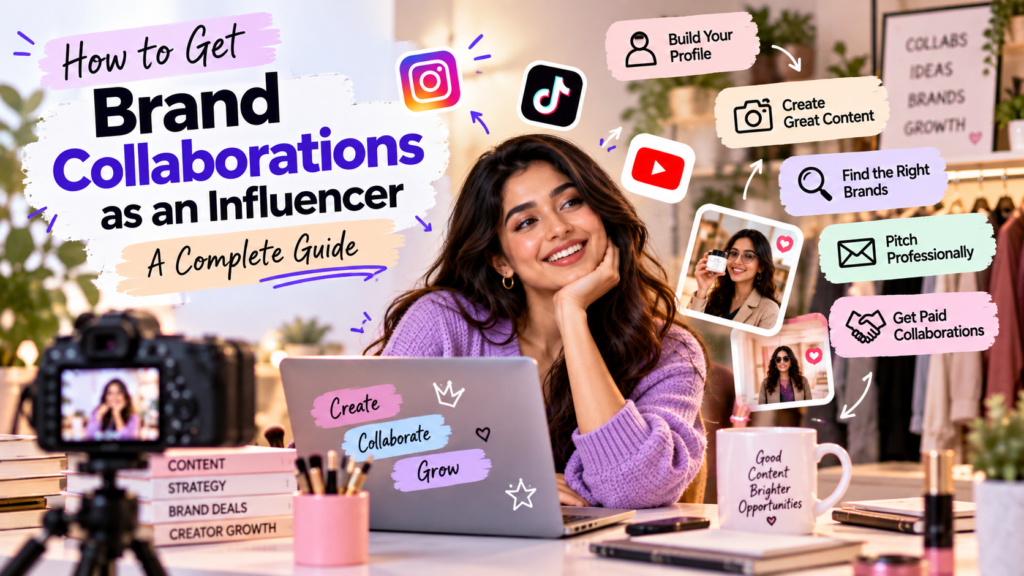
Introduction
Have you ever wondered how social media creators get paid to promote products, receive free products from brands, or collaborate with companies they love?
The answer often lies in brand collaborations.
Today, influencer marketing has created exciting opportunities for content creators across fashion, beauty, fitness, travel, technology, food, and lifestyle. You don’t need millions of followers to start working with brands. What matters is creating quality content, building a genuine audience, and finding businesses that match your niche.
However, getting your first brand collaboration can feel challenging. You might have good content but struggle to find brands, or you may not know how to approach companies professionally.
The good news is that with the right strategy, you can improve your chances of attracting brands and turning your social media presence into valuable opportunities.
In this guide, we’ll explain how to get brand collaborations, create a strong influencer profile, approach brands, and build long-term professional relationships.
1. Choose Your Niche
Before reaching out to brands, identify what kind of content you want to create.
A niche helps brands understand your interests, your content style, and the audience you can reach.
Some popular influencer niches include:
- Fashion and beauty: Outfit inspiration, skincare routines, makeup tutorials, and styling tips.
- Food and lifestyle: Restaurant reviews, recipes, food discoveries, and everyday experiences.
- Fitness and wellness: Workout routines, fitness products, and healthy lifestyle content.
- Technology: Gadget reviews, smartphone comparisons, and technology tutorials.
- Travel: Destination guides, hotel experiences, and travel recommendations.
- Education: Learning resources, career advice, and skill development.
You can explore multiple interests, but having a clear primary niche makes it easier for relevant brands to understand why they should collaborate with you.
2. Create Quality Content Consistently
Brands want to see how you present products, communicate ideas, and engage your audience.
You don’t necessarily need an expensive camera or a professional studio. A smartphone, good lighting, clear audio, and creative ideas can be enough to start creating useful content.
Focus on making content that provides value to your audience. You could create tutorials, product demonstrations, reviews, entertaining videos, or relatable everyday content.
For example, if you want to work with fashion brands, create outfit combinations, styling videos, and clothing reviews. If you want to collaborate with technology brands, share gadget tips, product comparisons, and useful demonstrations.
Your existing content acts as a portfolio. It gives brands an idea of what you can create for them.
3. Build an Engaged Audience
Having a large number of followers can be helpful, but it isn’t the only factor brands consider.
Many businesses are interested in creators who have a relevant and engaged audience. Genuine comments, shares, saves, and meaningful conversations can demonstrate that people are interested in your content.
To build engagement:
- Respond to comments and messages.
- Create content that answers your audience’s questions.
- Use relevant trends without losing your personal style.
- Experiment with Reels, Stories, carousels, and other suitable formats.
- Study your analytics to understand which content performs best.
Avoid buying followers or engagement. Artificial numbers can damage your credibility and make it harder to build genuine brand relationships.
4. Create a Professional Influencer Profile
Think of your social media profile as your digital business card.
When a brand visits your profile, it should quickly understand who you are, what you create, and how to contact you.
Make sure your profile includes:
A clear bio: Explain your niche and the type of content you create.
A professional profile picture: Choose an image that is clear and recognisable.
A content portfolio: Pin your best posts or create a highlight showcasing product reviews and previous collaborations.
Contact information: Add a professional email address or another reliable contact method.
Audience insights: Be prepared to share relevant information such as audience demographics, average reach, engagement, and previous campaign results.
A professional profile helps brands evaluate whether your content and audience are suitable for their marketing objectives.
5. Find Brands That Match Your Content
One of the biggest challenges for influencers is finding brands that are genuinely interested in their niche.
Start by identifying businesses whose products you already use or whose target audience matches yours.
For example, a fitness creator could approach sportswear companies, fitness equipment brands, or nutrition businesses. A beauty creator could explore skincare, cosmetics, and personal care brands.
Research each brand before reaching out. Understand its products, audience, social media presence, and previous creator collaborations.
You can also explore influencer marketing platforms and creator networks that help connect influencers with businesses seeking promotional partnerships.
This is where Futurencer comes in. Futurencer aims to connect brands looking for promotion with influencers looking for collaboration opportunities, helping both sides discover partnerships that fit their goals.
6. Learn How to Approach Brands
When you find a suitable brand, introduce yourself professionally.
Your message should be short, personalised, and focused on what you can offer. Instead of sending the same generic message to every company, explain why you think the partnership makes sense.
Here is an example you can use.
Sample collaboration message:
Hi [Brand Name],
I’m a content creator specialising in [your niche]. I enjoy creating content around [your content topics], and I believe my audience could be a good fit for your brand.
I’d love to explore a potential collaboration and discuss how I could showcase your products through engaging content.
Here is my profile: [Your Profile Link]
Looking forward to hearing from you!
Best regards,
[Your Name]
Keep your message professional and avoid promising results you cannot guarantee. If a brand doesn’t respond, you can send one polite follow-up after a reasonable period.
7. Understand the Different Types of Brand Collaborations
Not every collaboration works in the same way. Understanding the available options can help you choose opportunities that match your goals.
Paid Collaborations
A brand pays you to create content featuring its product or service. Payment may depend on the content format, audience, deliverables, usage rights, and campaign requirements.
Barter Collaborations
A brand provides products or services in exchange for agreed promotional content. Before accepting, understand exactly what is expected and whether the arrangement is worthwhile for you.
Affiliate Partnerships
You promote a product through a unique tracking link or discount code and earn a commission on qualifying sales.
Long-Term Brand Partnerships
A brand works with you over an extended period through repeated campaigns, ambassador programmes, or ongoing content creation.
User-Generated Content (UGC)
You create content for a brand to use on its own channels or in advertisements. These arrangements may be based on content production fees rather than your follower count, and usage rights should be agreed upon beforehand.
Each arrangement has different expectations. Always clarify payment, deadlines, deliverables, exclusivity, and content usage rights before starting work.
8. Learn to Negotiate Your Rates
When a brand expresses interest, don’t immediately agree to the first offer without understanding the requirements.
Your rates should reflect the work involved, including planning, filming, editing, revisions, posting, and any additional rights the brand requests.
Consider these factors when discussing compensation:
- The type and number of content deliverables.
- Your average reach and engagement.
- The complexity of the creative work.
- Whether the brand wants to use your content in paid advertisements.
- Exclusivity requirements and campaign duration.
- Your experience and previous results.
If you’re new to collaborations, you can start with smaller projects to build experience and a portfolio. As your skills and results improve, you can review your pricing.
Remember that receiving a product is not automatically equivalent to receiving payment. Make sure you understand the arrangement before accepting.
9. Deliver Professional Work and Build Trust
Getting a collaboration is only the beginning. Delivering quality work is what can help you earn repeat opportunities.
Once you accept a campaign, confirm the brief, content format, deadlines, approval process, and agreed payment terms.
Create content that follows the brand’s requirements while remaining natural to your audience. Communicate promptly if you encounter a delay or need clarification.
After publishing, share relevant performance results with the brand, such as reach, views, engagement, and clicks where available.
Professional communication and reliable delivery can help turn a one-time collaboration into a long-term relationship.
Also, clearly disclose paid partnerships and other material connections in accordance with applicable advertising rules and platform policies.
10. Common Mistakes Influencers Should Avoid
If you want to build a sustainable creator career, avoid these common mistakes:
- Waiting for brands to contact you instead of actively searching for opportunities.
- Focusing entirely on follower count rather than audience relevance and content quality.
- Sending generic collaboration messages without researching the brand.
- Accepting unclear deals without confirming deliverables and compensation.
- Agreeing to unlimited content usage without understanding the rights involved.
- Promoting products you cannot honestly recommend.
- Ignoring deadlines or failing to communicate professionally.
- Buying followers or engagement to appear more influential.
Building credibility takes time, but genuine