
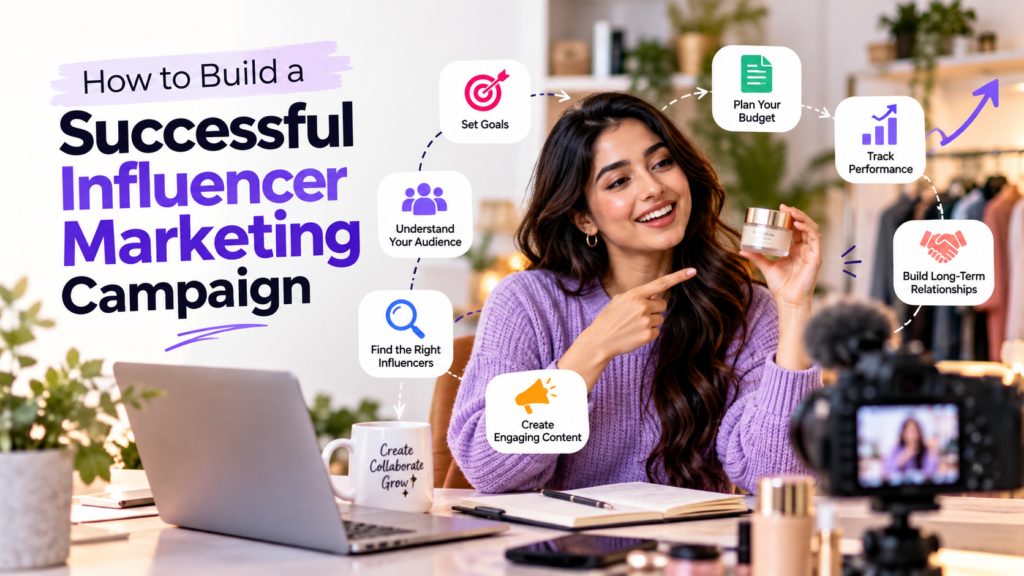
Introduction
In today’s digital world, people don’t just discover brands through advertisements. They also discover them through creators they follow, trust, and enjoy watching. Whether it’s a fashion influencer recommending an outfit, a tech creator reviewing a smartphone, or a fitness creator sharing their favourite products, influencer marketing has changed the way brands connect with customers.
However, a successful influencer marketing campaign involves more than just collaborating with a popular creator. It requires proper planning, understanding your audience, setting clear goals, and choosing the right influencers.
In this blog, we will explore how businesses can build a successful influencer marketing campaign, avoid common mistakes, and achieve better results through meaningful brand collaborations.
1. Set Clear Campaign Goals
Before starting any influencer marketing campaign, the first step is to understand what you want to achieve. Without a clear goal, it becomes difficult to measure whether your campaign is successful.
Different brands have different objectives. For example, a new clothing brand may want to increase brand awareness, while an established skincare company may want to generate more sales.
Some common influencer marketing goals include:
- Brand awareness: Introducing your brand to new audiences.
- Engagement: Encouraging likes, comments, shares, and conversations.
- Website traffic: Bringing potential customers to your website.
- Lead generation: Collecting enquiries or potential customer information.
- Sales and conversions: Encouraging people to purchase your products or services.
Choose one primary goal and a few supporting goals. This will help you plan your campaign more effectively and select the right performance metrics.
2. Understand Your Target Audience
Once you have defined your goals, the next step is to identify your target audience.
Think about the people who are most likely to be interested in your product. Consider their age group, location, interests, lifestyle, spending habits, and social media preferences.
For example, if you are promoting affordable fashion products, your target audience might include young adults interested in styling, fashion trends, and budget-friendly shopping.
On the other hand, if you are promoting professional cameras, you might focus on photography enthusiasts, filmmakers, and content creators.
Understanding your audience helps you find influencers who already connect with the people you want to reach. This makes your campaign more relevant and increases the chances of meaningful engagement.
3. Find the Right Influencers
Choosing the right influencer is one of the most important parts of a successful campaign.
Many brands make the mistake of selecting influencers only because they have a large number of followers. However, follower count alone does not guarantee results.
A smaller creator with a highly relevant audience may be more suitable for your campaign than a celebrity with millions of followers.
Consider these factors when choosing influencers:
Niche relevance: Does the creator regularly produce content related to your industry?
Audience quality: Are their followers the type of customers your brand wants to reach?
Engagement: Do people actively like, comment on, share, and respond to their content?
Content quality: Can the influencer present your product in an interesting and professional way?
Authenticity: Does the creator communicate naturally and maintain a credible relationship with their audience?
For example, a skincare brand should consider beauty and skincare creators whose audiences are interested in those products, rather than selecting an unrelated influencer simply because they are popular.
The right partnership is about audience relevance, trust, and shared interests.
4. Choose the Right Social Media Platform
Not every social media platform is suitable for every campaign. Your choice should depend on your target audience, product, and marketing objectives.
- Instagram: Suitable for fashion, beauty, lifestyle, food, and visual product promotions through Reels, Stories, and posts.
- YouTube: Useful for detailed product reviews, tutorials, demonstrations, and long-form content.
- Facebook: Can help brands reach communities and audiences that actively engage with pages, groups, and video content.
- LinkedIn: Useful for B2B marketing, professional services, industry expertise, and business-focused collaborations.
- Short-form video platforms: Useful for reaching audiences through entertaining, educational, and trend-driven videos.
Before selecting a platform, research where your audience spends time and what type of content influences their decisions.
It is better to choose the platform that fits your campaign than to promote your product everywhere without a clear strategy.
5. Set a Realistic Campaign Budget
Budget planning helps you understand what you can achieve with the resources available.
Influencer marketing costs can vary depending on the creator’s audience size, engagement, niche, content format, production requirements, and usage rights.
Your budget should consider more than just the influencer’s fee. You may also need to account for:
- Content creation and production costs.
- Product samples or shipping.
- Paid advertising to boost creator content.
- Affiliate commissions, where applicable.
- Content licensing and usage rights.
- Campaign tracking and management.
For smaller businesses, working with nano or micro influencers can be a practical starting point. Brands with larger budgets may combine several creators or work with established influencers to achieve broader reach.
The important thing is to allocate your budget according to your goals and expected outcomes rather than spending everything on a single popular creator.
6. Create a Clear Campaign Brief
After selecting your influencers, provide them with a clear campaign brief.
A campaign brief explains what the brand wants to communicate and what the influencer needs to deliver. It ensures that both sides understand the expectations before the collaboration begins.
Your brief should include:
- Campaign objective and target audience.
- Product or service details.
- Key messages and important product benefits.
- Required content formats, such as Reels, Stories, or videos.
- Posting schedule and deadlines.
- Payment terms and deliverables.
- Content approval process and usage rights.
- Advertising disclosure requirements.
- Tracking links, discount codes, or other campaign identifiers.
For example, a clothing brand might ask an influencer to create a styling Reel featuring three ways to wear a particular jacket.
However, brands should avoid controlling every word or movement. Influencers understand their audiences and should have enough creative freedom to present the product in their own style.
The best campaigns combine a clear brand message with the creator’s natural voice.
7. Create Engaging and Authentic Content
Content is at the heart of influencer marketing. Even if you choose the right influencer, your campaign may struggle if the content feels forced or overly promotional.
Audiences generally respond better to content that is useful, relatable, entertaining, or informative.
Here are some content ideas brands can use:
Product demonstrations: Show how a product works and explain its key features.
Honest reviews: Let creators share their genuine experience and opinions.
Tutorials: Demonstrate how customers can use a product in their everyday lives.
Unboxing videos: Showcase the product, packaging, and first impressions.
Storytelling: Explain how a product solves a problem or fits into a particular lifestyle.
Challenges and trends: Use relevant social media trends to make promotional content more engaging.
For example, instead of asking a fitness influencer to simply say that a protein shaker is good, a brand could collaborate with them on a video showing how they use it during their daily workout routine.
This approach makes the promotion feel more natural and gives viewers a clearer understanding of the product.
8. Launch and Promote Your Campaign
Once the content is ready, coordinate the campaign launch.
Confirm the posting dates, review the content where agreed, check that links and discount codes work, and ensure the required disclosures are included.
You can also support the campaign by sharing influencer content on your brand’s social media accounts, embedding approved content on your website, or using creator content in paid advertisements where the necessary permissions have been obtained.
A campaign calendar can help organise multiple influencers and prevent posts from being published at the wrong time.
If several creators are participating, consider spreading their content across different days. This can help maintain visibility over a longer period instead of concentrating every post into a single day.
9. Track Campaign Performance
Publishing content is not the final step. To understand whether your influencer marketing campaign worked, you need to measure its performance.
The metrics you track should depend on your original goals.
| Campaign goal | Metrics to track |
|---|---|
| Brand awareness | Reach, impressions, video views |
| Engagement | Likes, comments, shares, saves |
| Website traffic | Link clicks, sessions, click-through rate |
| Lead generation | Enquiries, sign-ups, qualified leads |
| Sales | Purchases, conversion rate, revenue |
| Profitability | Cost per acquisition, return on investment |
Use unique tracking links, UTM parameters, affiliate links, or creator-specific discount codes to understand which collaborations generate results.
For example, if three influencers promote the same product using different discount codes, you can compare how many sales each collaboration generates.
Remember that not every campaign produces immediate sales. Some campaigns build awareness and trust over time, so results should be evaluated according to the campaign’s objective.
10. Build Long-Term Relationships with Influencers
A successful influencer marketing strategy should not always focus on one-time collaborations.
When a creator genuinely connects with a brand, a long-term partnership can help communicate a more consistent message to their audience.
Brands can develop ongoing relationships through monthly content, product launches, ambassador programmes, affiliate partnerships, and exclusive promotions.
Long-term collaborations can also help businesses understand which creators consistently deliver quality content and useful results.
At the same time, influencers benefit from working with brands that respect their creativity, communicate clearly, and fulfil agreed payment terms.
Strong relationships create opportunities for both sides to grow together.
Common Mistakes to Avoid in Influencer Marketing
Even a well-planned campaign can face challenges. Avoid these common mistakes to improve your chances of success.
Choosing popularity over relevance: A large following does not necessarily mean the influencer reaches your ideal customers.
Ignoring audience authenticity: Review engagement patterns and audience relevance before making a decision.
Setting unclear expectations: Agree on deliverables, deadlines, compensation, and usage rights before work begins.
Making content too promotional: Give creators the freedom to communicate naturally while maintaining accurate brand messaging.
Failing to measure results: Track performance against your original objectives instead of relying only on likes and views.
Ignoring disclosure rules: Ensure paid partnerships and endorsements are clearly disclosed in accordance with applicable advertising regulations and platform policies.
Learning from these mistakes can help businesses make better decisions and build stronger influencer partnerships.
How Futurencer Can Help Brands and Influencers
Finding the right influencer or the right brand collaboration can be time-consuming. Brands want creators who understand their products and audience, while influencers want opportunities that match their content, interests, and niche.
Futurencer aims to bring brands and influencers closer together by creating opportunities for relevant promotional collaborations.
For brands, the goal is to find suitable creators who can communicate their message and connect with potential customers. For influencers, it is about discovering opportunities to work with brands, showcase their creativity, and develop professional relationships.
By focusing on relevant partnerships, clear campaign objectives, and effective collaboration, brands and creators can work towards campaigns that benefit both sides.
Whether you are a business launching a new product or an influencer looking for your next brand partnership, choosing the right collaboration is an important step towards success